NFL 2-for-1: How Much Time Should You Leave on The Clock to Get Another Possession in The First Half?
Photo Credit: Kevork Djansezian/Getty Images
Two-for-one is a very commonly discussed topic in the NBA. Teams understand that when they get the ball with 24 seconds or fewer left on the game clock in the first, second, or third quarter, they should hold for the last possession. They have also learned that if they shoot with 33 seconds remaining in the quarter, they maximize their chance to get the last effective possession of the period.
The marginal possession in the NFL is worth about 10x as much as the marginal possession in the NBA. In this analysis I’ll show how NFL teams can effectively use the two-for-one play to maximize their win probability.
This is my first analysis done almost entirely using an AI agent—all I did was import the data set, lay out the analysis, and give the AI agent a few requirements along the way. For any aspiring data scientists out there, completing thorough analyses has never been easier!
I looked at every second-quarter drive over the past 25 seasons and charted how often the opponent gets another drive (Figure 1 below). Each time bucket on the x-axis has at least 139 historical drives, with the mean number of sample drives in each bucket being 466.
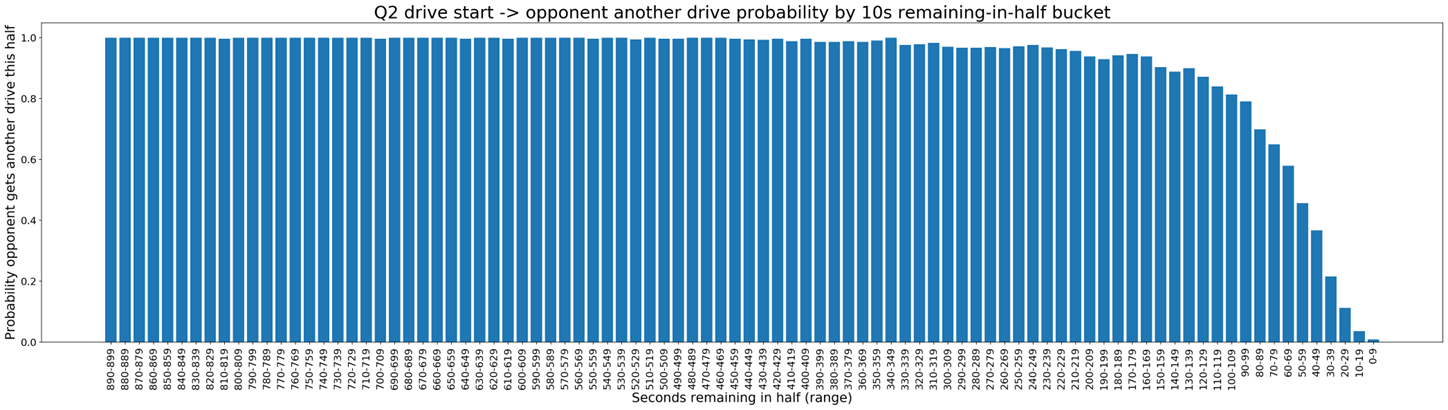
Figure 1: Probability that the opponent gets another drive, based on the time remaining at the start of the current drive in NFL second quarters over the past 25 seasons
When the current drive begins with between 230 and 309 seconds remaining in the first half, the opponent has a 97% chance of getting another drive. From there, the probability declines gradually over the next 120 seconds before dropping off steeply.
Additionally, Table 1 below shows the opponent’s expected points on their next drive, along with the probability that the drive ends before the clock runs out without an offensive score.
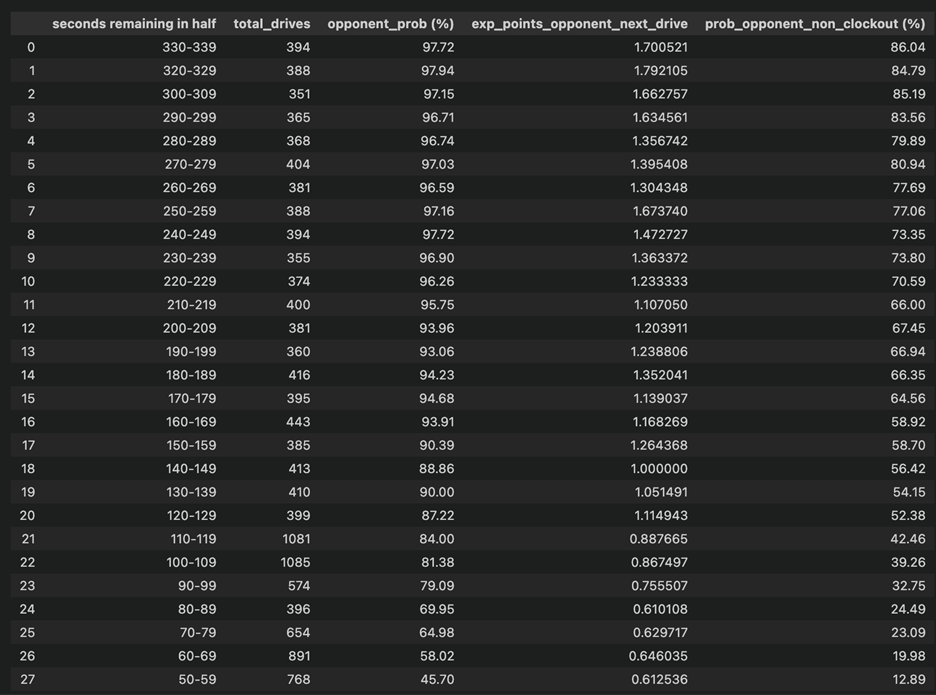
Table 1: A breakdown of the probability that the opponent will get a drive, the opponent’s next drive expected points, and the probability that the opponent has a drive that does not result in a non-scoring clock runout
When the current drive begins with 290–339 seconds remaining in the first half, the opponent averages 1.6–1.8 expected points per next drive and has an 84–86% chance of completing the next drive before the clock expires. This is the sweet spot. Leaving your opponent roughly five minutes in the half maximizes your chances of winning. As a result, with six to seven minutes remaining in the first half, the offense should operate with urgency to maximize its final possession.